Adopting a rescue dog is one of the most rewarding things you will ever do. It is also slower, gentler, and more careful than bringing home a puppy. Whatever the dog’s story before they arrived at your door, your job is now patience. Here is the path.
The First 72 Hours: Just Be Present
Do not train. Do not socialise. Do not invite friends over. Just exist near your new dog. Let them see you, hear you, learn your routine. Most rescue dogs spend the first three days hiding, sleeping, or watching. All normal.
Set Up The Safe Den
- A quiet room or corner with their bed, water, and food.
- Closed off from foot traffic.
- Their stuff stays in this spot. Predictable.
- No one approaches them unless invited. Especially children.
The First Meal
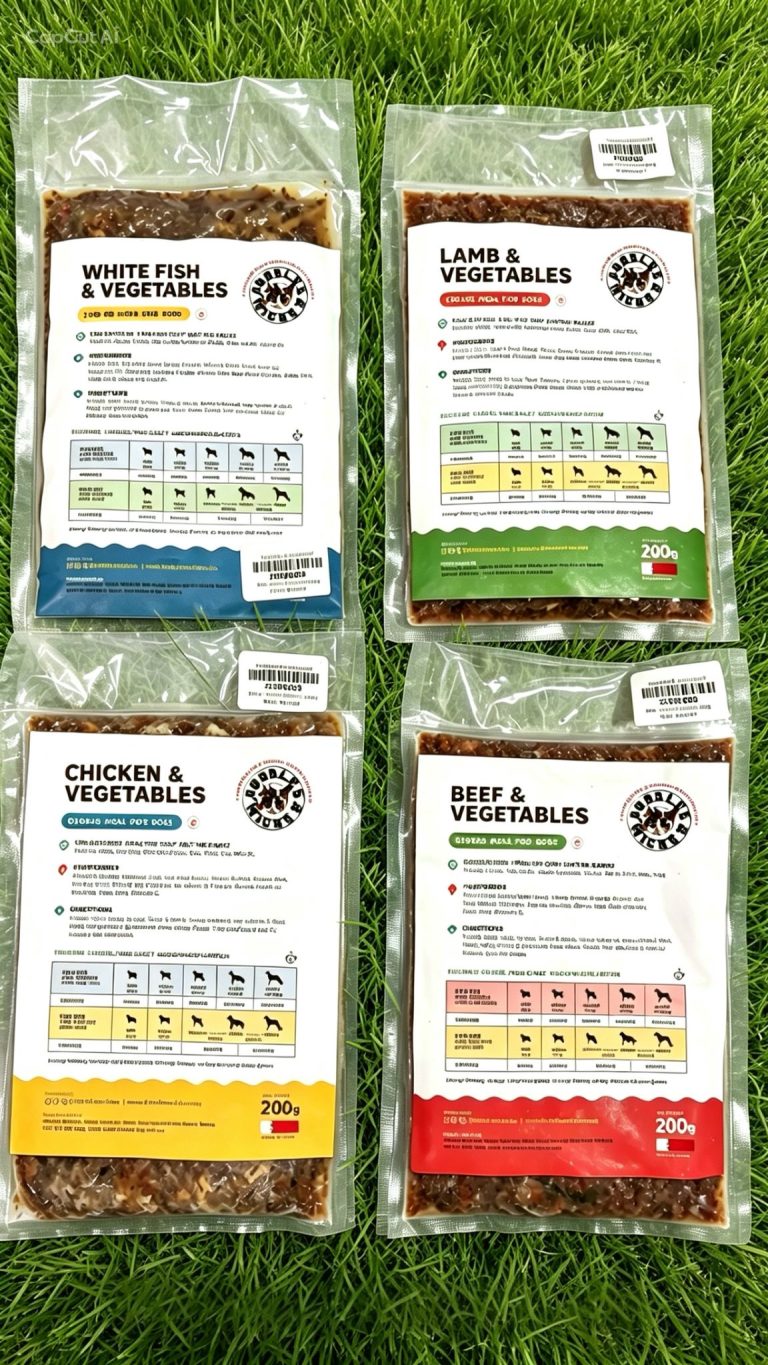
Whatever they ate at the shelter or foster home, get the same food initially. Sudden food changes plus stress equal digestive disaster. After a week of stable settled behaviour, transition gradually to your preferred food. Most rescue dogs do beautifully on our Chicken and Veg Meal, the mildest, most digestible option. Add a splash of chicken broth for hydration and aroma.
Decompression Protocol (Weeks 1 to 3)
Chicken & Veg Meal (Cooked)
This is a balanced meal for dogs. Directions: Freeze until ready to use. Thaw & serve. Once opened, use within 2 days. Keep refrigerated & separate from other foods. This product is not for human consumption.
- No walks for 3 to 5 days. Garden potty breaks only.
- Limit interactions to 2 to 3 family members.
- Quiet, predictable schedule.
- Soft voices.
- No sudden movements.
- Feeding times exactly the same each day.
Reading The Signs of Settling In
- Day 1 to 3: Often shut down. Sleeps a lot. Eats little. Normal.
- Week 1 to 2: Tentative engagement. Starts to follow you. Eats more reliably.
- Week 3 to 6: Personality emerges. Joys, fears, quirks reveal themselves.
- Month 3+: True self. The dog at month three is usually who you have for life.
The 3-3-3 Rule
A common rescue rule of thumb: 3 days to decompress, 3 weeks to settle in, 3 months to feel at home. Some dogs are faster. Some are slower. None should be rushed.
Trust-Building Activities
- Hand feeding: Once they are comfortable enough to take food from your hand, you are over the first hurdle.
- Calm together time: Sit in their space (not too close), read a book.
- Slow grooming: Once they are ready, gentle brushing builds bonding.
- One toy at a time: Introduce gradually.
Common Rescue Dog Challenges
Chicken Broth
High in collagen for joint support. Provides hydration. Promotes gut health. Source of vitamins, minerals & nutrients. Low-calorie food. Directions: serve four to five tablespoons for every 10 kg.
Food Guarding
Many rescue dogs experienced food insecurity. They may stiffen, growl, or snap if you approach their bowl. Solution: never approach the bowl while they eat. Feed in a separate room if needed. Build trust over months, eventually you can hand-feed alongside the bowl.
Resource Guarding
Same idea, but with toys or sleeping spots. Manage the environment (remove triggers) until trust is built.
Reactivity On Leash
Many rescues react to other dogs, strangers, or vehicles. Start with distance, increase only when calm at the current distance. Use very high-value treats like Crack-a-lickin Liver to build positive associations.
Sensitivity To Noise
Lambtastic – 100% Natural Lamb Lung Bites (50g)
Introducing Lambtastic – Lamb Lung Bites, a clean, single-ingredient treat crafted for dogs that deserve healthy, flavorful rewards. Made with 100% lamb lungs, these crunchy bites deliver natural protein, essential nutrients, and an irresi
Storms, fireworks, even doorbells. Create a quiet retreat space. Build a positive association by offering Lambtastic Lung Bites or a frozen kong during scary moments. The food becomes a comfort signal.
Separation Anxiety
Common in rescues who have lost previous homes. Build absence tolerance gradually. Never punish destruction when alone, it is panic, not defiance.
Health Watch in Week 1
- Loose stools: Stress-induced. Bland fresh food and broth help. Vet if persistent.
- Refusing food: 24 hours is normal. Beyond that, vet.
- Excessive scratching: Possibly fleas or stress. Vet visit clarifies.
- Limping or favouring a leg: Vet.
Building The Long Routine
After the first month, gradually layer in: short structured walks, basic training using positive reinforcement only, slow social exposures, ongoing nutritional improvements. The dog you have at year one is often radically different (and better) than the dog you brought home.
When Things Are Slow
Crack-a-lickin Liver with Veggies
Liver Crackers with real veggies. Perfect as snacks or training. Low fat protein source. Made with love.
Some rescue dogs take a year to fully relax. Some take longer. Some never become snuggly social butterflies but become deeply loyal in their own way. Match your expectations to the dog you have, not the dog you wished for.
The Bottom Line
Rescue dogs are not project dogs. They are dogs who have lived a life before yours and are slowly learning to trust again. Patience is the strategy. Fresh, gentle, consistent food from Bubbles and Miche is the daily reassurance that they have arrived somewhere good.
Three days. Three weeks. Three months. Then forever.